Schenker Salvi Weber Architekten ZT GmbH Schottenfeldgasse 72/2/5, 1070 Vienna +43 699 15504050 info@schenkersalviweber.com schenkersalviweber.com
Facebook Instagram Pinterest
Subscribe our newsletter
(Children’s Art Laboratory)
Project Competition 2020, 1st Prize, Realisation 2021-2024,“From a child’s perspective”
“A one-of-a-kind building and an internationally unprecedented project: children up to the age of twelve from all social and educational backgrounds can discover contemporary art in workshops and exhibitions at the highest level. It is not a museum rather an inviting laboratory.”
“With its distinctive form, the building serves as a landmark on the route from St.Pölten’s baroque old town to the cultural district. Inside, the timber slat facade lend an impression of lightness and transparency.”
“Inside, the timber slat facade creates a fascinating interplay of light and shadows while offering breathtaking views out into the park. Complementing the steel and exposed concrete structure, wood offers a warm and welcoming atmosphere.”
“A circulation pathway spirals around it to the top of the building – the ‘helix staircase,‘ a rich space of activity with generous places for crafting, playing, working, and exhibiting.”
“This winding stair element connects the entrance foyer with the exhibition space on the first floor and the indoor and outdoor labs on the second floor, tapering as it rises. The two-story outdoor lab, sheltered by timber slats that clad the complete building, seems to float among the park’s treetops.”
“The inner structure is designed to encourage participation and communication. The children’s creativity can unfold as they move through a continuum of flexible spaces that can be opened up or partitioned off as needed.”
A distinctive aspect of this project was the active involvement of a Children’s Advisory Board – a think tank comprised of kindergarten and school groups – in the planning and design of the exhibition spaces and park. They regularly exchanged ideas with the architects and artists in so-called co-creation processes. This resulted in an ecologically sustainable, aesthetically ambitious, and participative architecture tailored to the needs of children.
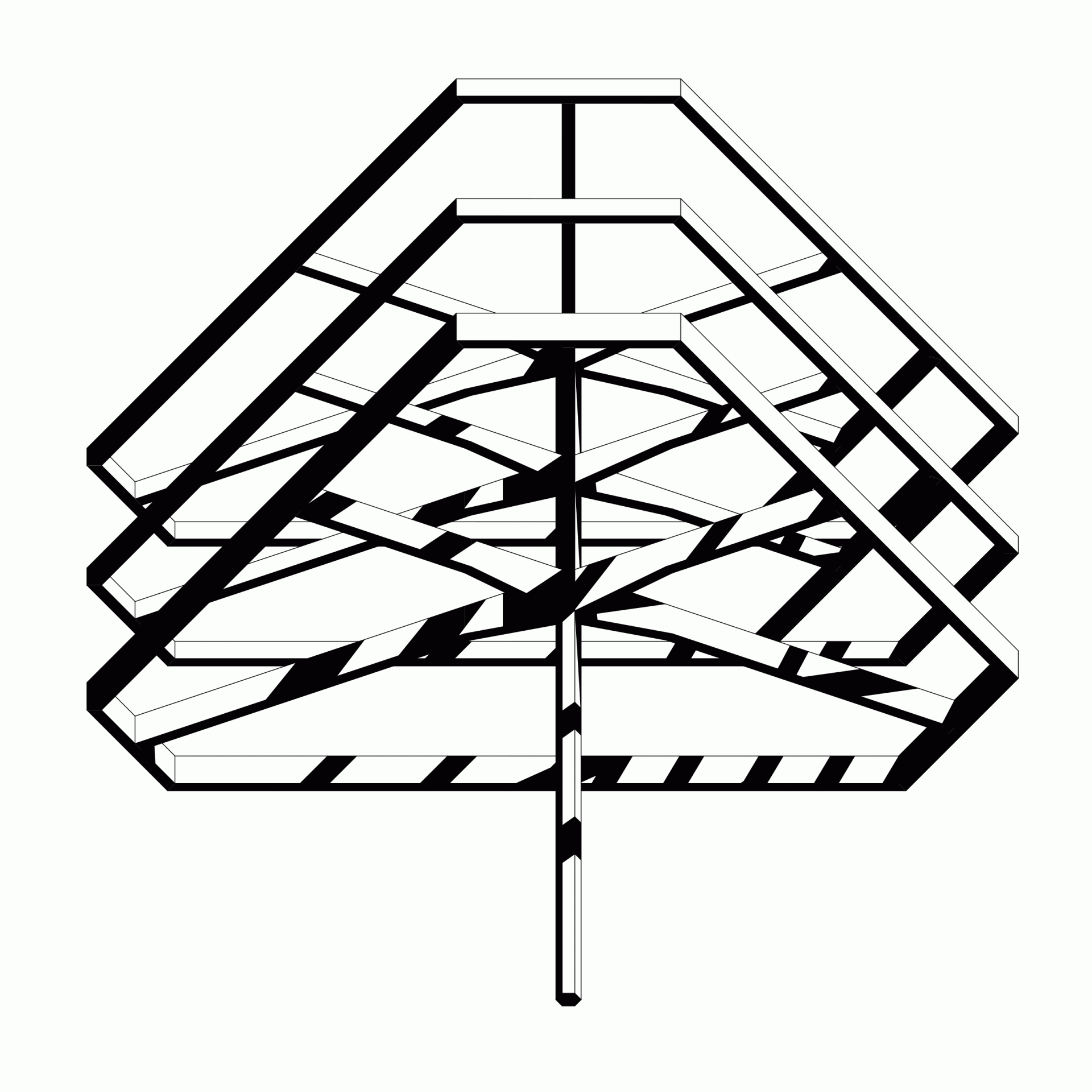
“The building’s footprint has a triangular form with slightly inward creased sides and chamfered corners, which gives rise to a recurring hexagonal motif inside.”
“A central tree trunk made of concrete at the center of building with six branches that distribute the load literally and figuratively.“
P R O J E C T D E T A I L S
A W A R D S
D O W N L O A D S
P U B L I C A T I O N S
„KinderKunstLabor: St. Pölten bekommt Kindermuseum“, Der Standard, 14.5.2021
C O O P E R A T I O N